


Quick answer
Buyers look at the numbers first. Clean numbers mean the business can be understood without you in the room. With your accountant, pull the trailing twelve months and the last 24 months by month, the same way every month. Separate recurring from one-time revenue, name your top customers, note one-time events, and put it all in one place. If you’re the only person who can explain the numbers, they aren’t clean yet.
Why clean numbers matter in a sale
Buyers look at the numbers first, and they price in what they can’t understand.
A buyer is paying for future profit. The numbers are their best evidence of what that profit will be. When the numbers are consistent and easy to follow, the conversation moves to growth and terms. When they’re messy, every question takes longer, confidence drops, and the risk shows up in the price or the deal terms.
This isn’t a valuation, and it isn’t accounting or tax advice. It’s the work of making the last two years clear and consistent, with your accountant, so a buyer can read them without you in the room.
What to clean
The last 12 months, the last 24 by month, and what’s behind them.
Trailing twelve months.
Revenue and profit for the last 12 months, the first number most buyers ask for.
Monthly results for the last 24 months.
Month by month, so trends and seasonality are visible.
Recurring vs one-time revenue.
Repeat customers, contracts and subscriptions, separated from one-off sales.
Customer concentration.
Your top 20 customers and what share of revenue each represents.
Cash in and cash out.
The real timing of money, not just what the accounting says was earned.
How to clean them
The same numbers, pulled the same way, every month, in one place.
Start with the source systems.
Your accounting software, bank, store or invoicing tool. Fix miscategorized transactions at the source, not in a spreadsheet on top.
Pull the same numbers the same way every month.
Same categories, same cut-off date. Consistency matters more than detail.
Separate recurring from one-time.
Tag revenue by type so a buyer can see what repeats.
Name the top customers.
List them with their share of revenue, and how long each has been a customer.
Note one-time events.
A big one-off order, a lawsuit, a move, a bad month with a clear cause. Write a one-line explanation for each.
Put it in one place.
One file or folder a buyer’s team can work through without asking what a number means.
Do this with your accountant or bookkeeper. They own the books and the tax side. Your job is making sure the operations behind the numbers are consistent: orders entered one way, invoices sent on time, costs coded to the right place. If the numbers need a finance lead to sort out, that’s when a fractional CFO helps.
What buyers ask about first
Owner dependence, customer concentration, consistency, and whether the business runs without you.
Clean numbers make those conversations shorter. If revenue is steady month to month, no single customer dominates, and the business kept performing when you stepped away, the numbers tell that story on their own. For the full picture of what buyers look at, see our guide on how to sell your business.
Common problems that slow a sale
Find them now, while there’s time to fix or explain them.
Keeping them clean
Clean numbers aren’t a project before a sale. They’re a monthly habit.
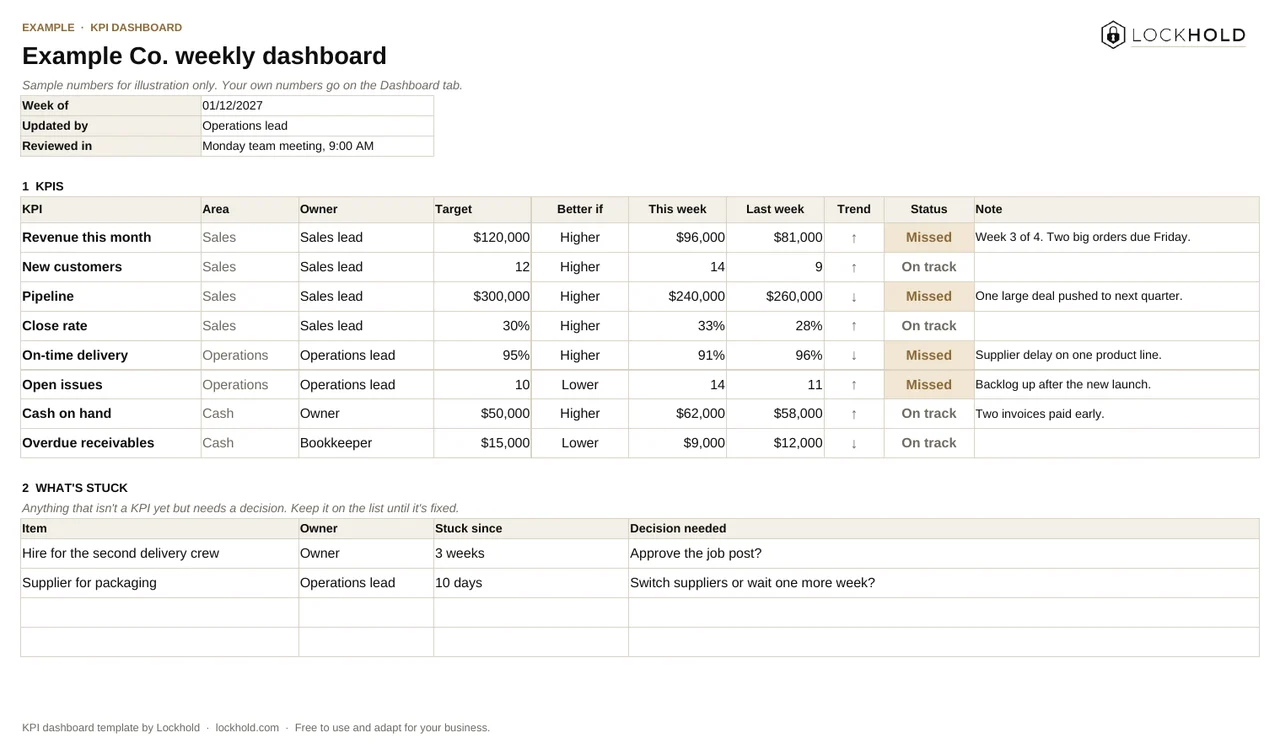
Close the books on a fixed day each month. Review the same handful of numbers every week on a KPI dashboard, and watch cash on a 13-week cash flow forecast. When this runs as a habit, getting ready for a buyer is a matter of printing what you already have. the free KPI dashboard template gives you a one-screen layout to start with.
The KPI dashboard template
The one-page dashboard from this guide, ready to fill in. Works in Excel and Google Sheets.
- Eight KPIs on one page: owner, target, this week, last week. Trend and status fill themselves in.
- A “what’s stuck” list for the things that aren’t a KPI yet.
- A how-to tab, a filled example and a KPI menu to pick from.
Here's your KPI dashboard template.
We also emailed you a copy, and you’ll get our monthly operator note. Unsubscribe any time.
That didn't go through. Please try again, or email hello@lockhold.com.
How to Clean Up Your Numbers Before You Sell
Numbers a buyer can understand without you in the room. One page, ready to print or share with your team.
Your guide is ready.
We also emailed you a link to your library, so you can come back to it from any device.
That didn't go through. Please try again, or email hello@lockhold.com.
FAQ
What financials do buyers want to see?
Usually the trailing twelve months of revenue and profit, monthly results for the last two to three years, tax returns, customer concentration, and recurring versus one-time revenue. Your broker or advisor will set the exact list for your deal.
How far back do I need clean numbers to sell my business?
At least 24 months of consistent monthly results, plus the trailing twelve months. Many buyers ask for three years of financial statements and tax returns.
Should I clean up my books myself or use an accountant?
Use your accountant or bookkeeper for the books and tax side. You can make sure the operations behind the numbers are consistent, so the numbers stay clean month after month.
What is customer concentration?
How much of your revenue comes from your largest customers. If one customer is more than about a fifth of revenue, buyers see risk, because losing them after the sale would hurt.
Want it built and running?
Pull the trailing twelve months and the last 24 months by month. Separate recurring from one-time. Name your top customers. Put it in one place. That’s the start.
If you want the operations behind the numbers made consistent, that’s part of our exit planning work: clean monthly reporting built with your accountant, ready before a buyer asks.
Related guides and work
How to sell your business: the operations side
What buyers look at first, the prep, a 12-month plan, and why you want more than one buyer.
Read the guide GuideHow to build a KPI dashboard for a small business
The KPIs worth tracking, an example layout, and how to build a dashboard your team checks every week.
Read the guide ServiceExit planning
Operations and the data room, ready before a sale.
Read →