


Quick answer
A fractional COO builds the systems that run the work. A fractional CFO builds the systems that run the numbers. If the work still runs through you, start with the COO: the processes have to exist before the numbers can stay clean. If the work already runs and the numbers are the bottleneck, or you’re preparing for a raise or a sale, start with the CFO. Many owners do the COO work first, then bring in the CFO.
What a fractional COO owns
The systems that run the work, so the business doesn’t need the owner in every decision.
A fractional COO is a part-time operations leader. They build and run the day-to-day: how orders move, who owns each process, which tools the work lives in, and the weekly meeting where owners report their numbers. The goal is a business where the work moves without you in the middle of it.
It’s the right first hire when the work still runs through you: decisions queue on your desk, the same problems keep coming back, and delivery slows down when you step away.
What a fractional CFO owns
The systems that run the numbers, so you can see the business clearly and plan with confidence.
A fractional CFO is a part-time finance leader. They own financial reporting, cash visibility, budgets and forecasts, pricing and margin analysis, and the relationship with lenders and investors. They usually work alongside your bookkeeper and outside accountant, not instead of them.
It’s the right first hire when the numbers are messy or late, cash keeps surprising you, or you’re preparing for a raise, a loan or a sale. A CFO doesn’t build the operating processes. They make the numbers those processes produce trustworthy and useful.
Fractional COO vs CFO, side by side
One builds how the work gets done. The other builds how the money is measured and planned.
Who to hire first
If the work still runs through you, start with the COO. The systems have to exist before the numbers can be clean.
Start with a fractional COO if:
you’re the bottleneck, processes live in people’s heads, the same mistakes repeat, and the numbers are wrong because the work behind them isn’t consistent.
Start with a fractional CFO if:
the work already runs without you, but you can’t see margin by product or customer, cash keeps surprising you, or a lender or investor is asking for numbers you don’t have.
The test is simple. Write down what’s stuck. If it’s a process or a handoff, it’s a COO problem. If it’s the numbers, and the processes are already built, it’s a CFO problem.
If the processes aren’t written, the numbers won’t stay clean. A CFO can tidy the books, but if orders are entered three different ways and nobody owns invoicing, the mess comes back next month. That’s why most owner-led businesses need the work systems first.
When you need both
Before a raise or a sale, and once the business is big enough that both sides need a leader.
COO first.
Build the processes, name the owners, and set the weekly rhythm, so the work produces consistent data.
CFO next.
Turn that data into reliable monthly reporting, a cash forecast and a plan.
Both, together, before a raise or a sale.
Buyers and investors look at how the business runs and at the numbers. See our guide to selling the business.
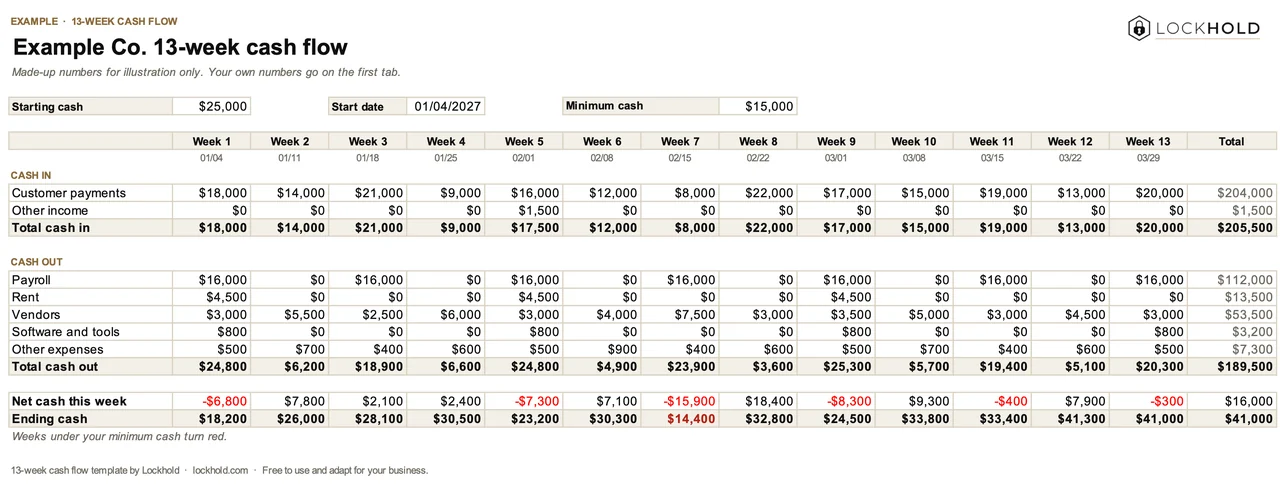
The one tool that sits between the two seats is a weekly cash forecast: operations knows when money moves, finance knows what it means. the free 13-week cash flow template gives you the layout, whichever seat you fill first.
The 13-week cash flow template
The forecast from this guide, ready to fill in. Works in Excel and Google Sheets.
- Thirteen weeks on one page: cash in, cash out, net and ending cash for each week.
- A built-in warning: any week below your minimum cash turns red.
- A how-to tab and a filled example so you can see how it reads.
Here's your 13-week cash flow template.
We also emailed you a copy, and you’ll get our monthly operator note. Unsubscribe any time.
That didn't go through. Please try again, or email hello@lockhold.com.
Fractional, full-time, or grow your own
Fractional is one way to fill these seats. It isn’t the only one.
Some owners hire full-time from the start. Others promote someone who already knows the business and let them grow into the role. Fractional help makes the most sense when you need the experience now but can’t yet justify, or find, a full-time senior hire.
For more on the operations seat, see integrator vs fractional COO and how to find a fractional COO.
Fractional COO vs Fractional CFO
Systems that run the work, or systems that run the numbers: who first. One page, ready to print or share with your team.
Your guide is ready.
We also emailed you a link to your library, so you can come back to it from any device.
That didn't go through. Please try again, or email hello@lockhold.com.
FAQ
What is the difference between a fractional COO and a fractional CFO?
A fractional COO is a part-time operations leader who builds the systems that run the work: processes, owners and the weekly rhythm. A fractional CFO is a part-time finance leader who builds the systems that run the numbers: reporting, cash visibility and planning.
Should I hire a fractional COO or CFO first?
If the work still runs through you, start with the COO, because the numbers won’t stay clean until the processes behind them are consistent. If the work already runs and the numbers are the bottleneck, start with the CFO.
Can one person do both roles?
Rarely well. The skills are different: one builds how work moves through the business, the other measures and plans the money. Some operators are strong with numbers, but a business preparing for a raise or sale usually needs a dedicated finance lead.
Do I still need an accountant if I have a fractional CFO?
Usually, yes. A fractional CFO typically works alongside your bookkeeper and outside accountant, who handle the books and taxes. The CFO turns those numbers into reporting, forecasts and decisions.
Want it built and running?
Write down what’s stuck. If it’s a process or a handoff, start with the operations side. If it’s the numbers, and the processes are already built, start with finance.
If it’s the operations side, that’s the work behind our fractional COO service: the processes, owners and weekly rhythm, built and handed over running, so a CFO has clean numbers to work with when you bring one in.
Related guides and work
Integrator vs fractional COO
The difference between the two roles, which one fits your stage, and why many owners start fractional.
Read the guide GuideHow to build a 13-week cash flow forecast
A week-by-week view of cash in and out, and the weekly habit that keeps it useful.
Read the guide ServiceFractional COO
The COO work, without the full-time hire: systems, reporting and handoffs built and handed over.
Read →